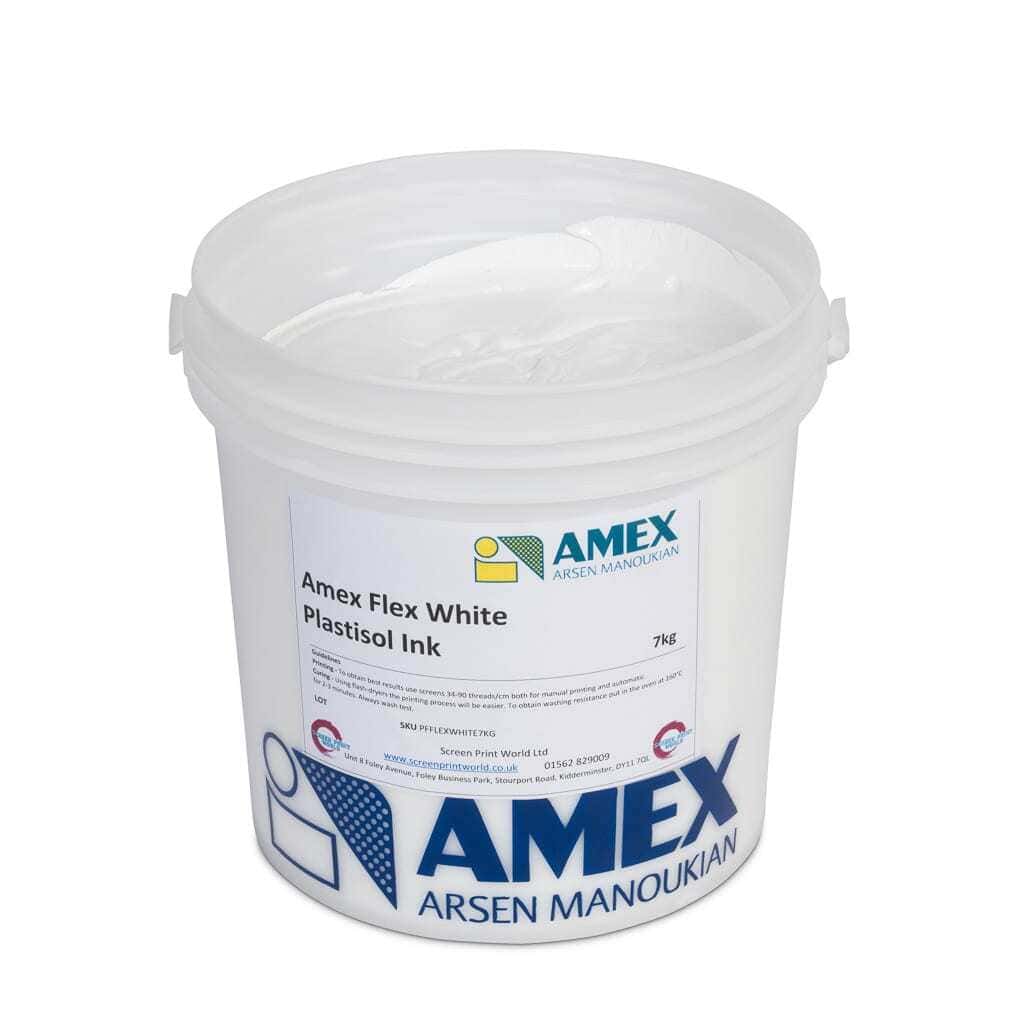
In the world of screen printing, vibrant reds, bright blues, and neon yellows often get all the glory. But ask any professional printer what the most critical ink in their shop is, and they’ll almost always give you the same answer: white.
If you’ve ever tried to print a yellow design on a black t-shirt, you know the frustrating result. Instead of a bright, bold logo, you get a dull, muddy, greenish-brown mess.
Why? Because most inks are translucent. The dark colour of the fabric “pollutes” the ink, changing its appearance completely.
This is where white ink comes in. It’s not just another colour; it’s a foundational tool that plays three vital roles in your print shop.
1. The Foundation: White Ink as an Underbase
This is the most important job white ink has. An underbase is a layer of white ink printed first, in the exact shape of your design, and then “flash-cured” (partially dried).
Think of it as a primer for a dark wall. You’d never paint a light beige colour directly onto a navy blue wall, would you? You’d prime it with white first. A white underbase does the exact same thing for a t-shirt.
Without an Underbase: Your coloured ink sinks into the dark fabric, resulting in a dull, faded, and discoloured print.
With an Underbase: Your coloured ink sits on top of a bright white, opaque “canvas.” This allows the colour to appear vibrant, bright, and true to how it looks in the tub.
2. The Star of the Show: White as a Standalone Colour
A crisp, bright white print on a black, navy, or red garment is a timeless, high-impact look. It’s a classic for a reason.
But getting a white print that is truly opaque—and not a “vintage” grey—requires the right ink and the right technique. Because white ink has to fight against the dark fabric, it’s often printed using a “Print-Flash-Print” (PFP) method.
This is exactly what it sounds like:
- Print the white ink.
- Flash cure the ink until it’s dry to the touch.
- Print a second layer of white ink directly on top.
This PFP technique, combined with a high-opacity white ink, builds up a solid, brilliantly white layer that looks professional and durable.
3. The Finishing Touch: White as a Highlight
In advanced, photorealistic printing (often called “simulated process”), white ink plays a third, more subtle role.
After all the main colours are printed (including the underbase, reds, blues, etc.), a final screen is used to add “highlight white.” This screen is designed to print only the brightest parts of the image—think of the glint in an eye, a flash of light on metal, or the bright white crest of a wave.
This final highlight layer is what makes the entire design “pop” with a 3D effect, giving it a true sense of depth and realism that you can’t achieve otherwise.
Why is White Ink So Thick (and Tricky to Use)?
New printers quickly discover that white ink feels different from all other colours. It’s thick, creamy, and can be more challenging to work with.
There’s a simple reason for this: opacity.
To do its job, white ink is loaded with a high concentration of pigments (like titanium dioxide). This heavy pigment load is what makes it opaque, but it also makes the ink thick (high viscosity).
Because it’s so thick, you need to treat it differently:
- Screen Choice: You must use a lower mesh count screen (e.g., 110-160 mesh / 43T-62T) to allow enough of the thick ink to pass through.
- Curing: A thick layer of white ink takes longer to cure because the white surface reflects the heat from your dryer. Be sure to slow down your belt speed or increase your temperature to ensure it’s fully cured.
The Bottom Line
Mastering white ink is a milestone for every screen printer. Whether you’re using it as a foundational underbase, a bold standalone colour, or a subtle highlight, a good quality white ink is non-negotiable for professional results.
Ready to achieve brilliant, opaque white prints?
We stock a wide range of industry-leading plastisol and water-based white inks designed for every job, from high-opacity whites to low-bleed options for polyester.
Browse Our Full Range of White Inks or contact our expert team here in Kidderminster for advice on finding the perfect ink for your project.